
For information on the latest deep-pockets, out-of-state organization with a pro-charter school agenda to set up shop in Boston, joining Stand for Children and Democrats for Education Reform, read this new fact sheet from Citizens for Public Schools. Click here. → Read More
Less Testing, More Learning MA Campaign
September 8, 2014 by
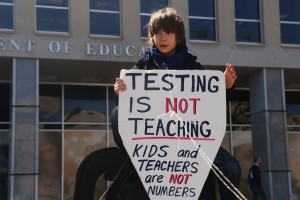
Citizens for Public Schools, along with teachers, parents, and other community members, is launching a statewide campaign to roll back high-stakes testing in Massachusetts.
We will:
- hold forums and other actions this fall,
- settle on specific demands over the next few months,
- present them to the state Board of Elementary and Secondary Education and the legislature.
CPS Report Looks at the Facts on MA Charter Schools
May 20, 2014 by
 CPS’s June 2013 report, Twenty Years After Education Reform: Choosing a Path Forward To Equity and Excellence For All, includes a chapter devoted to the facts on charter schools in Massachusetts. Click here to download the full report. (See Chapter 4 for information on charter schools.) Click here to download the executive summary. → Read More
Finnish Lessons: What We Learned from Pasi Sahlberg
May 16, 2014 by
By Lisa Guisbond
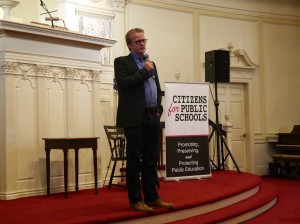
We all got a taste of Finnish education from Pasi Sahlberg Wednesday night, and boy did it taste good! In describing his country’s approach to school reform, the Finnish educator and author filled First Parish Church with hope and optimism by showing us “some new ideas about what is possible, not just about what is wrong.”
Pasi did not shy away from critiquing the ways U.S. education reform has gone astray. “You are testing your kids too much, it is too expensive, and it has negative consequences for students.” (According to Pasi, an expression I thought was a piece of American folk wisdom is also used in Finland: “Weighing the pig doesn’t make it fatter.” The difference is, in Finland, they take this to heart!)
Pasi described a system that spends less than the U.S. Nevertheless, it gives all schools equitable resources, has well-trained and highly respected teachers, little standardized testing, and recognizes children’s need for play and creative expression. → Read More
CPS Presents Pasi Sahlberg, May 14 in Harvard Square
April 8, 2014 by

We are excited to present a talk by Pasi Sahlberg, author of Finnish Lessons: What Can the World Learn from Educational Change in Finland? and now a visiting lecturer at the Harvard Graduate School of Education. Pasi has been a teacher, a teacher educator and educational coach and advisor for many years. He has become a global ambassador for Finland’s successful approach to school reform, one that is radically different from the test-driven, top-down reforms many of us have been resisting here in Massachusetts and across the United States.
You won’t want to miss this important event. Click here to register online today. Spread the word to your friends and colleagues. Click here for a downloadable flyer to post and share. → Read More